Residential Solar with ₦0 Upfront Payment
Residential Solar
Solar panels, an inverter and batteries sized to the appliances your home needs to keep running.
Starts with Appliance list and site surveyCommercial & Industrial Solar
Solar and battery systems that cut generator fuel and keep offices, shops and factories running.
Starts with Energy audit and site surveyHome Automation
Integrated controls for lighting, air conditioning, gates and intercoms, planned around how you use your property.
Starts with Home walkthrough and plan reviewSecurity
CCTV, access control, alarms and intercom systems, with backup-power options to help maintain security during outages.
Starts with Site risk walkthroughResidential Solar
Solar panels, an inverter and batteries sized to the appliances your home needs to keep running.
- Suited for
- Residential
- Commercial (not a typical scope)
- Industrial (not a typical scope)
- Starts with
- Appliance list and site survey
- You bring
- Recent electricity bills or meter top-ups, what you spend on generator fuel, photos of your roof and a list of the appliances you cannot do without.
- We deliver
- Survey, sizing and a written quotation, supply, installation, testing, a handover walkthrough and planned maintenance.
Want a quick estimate first?Try the solar calculator
What is included
Typical scope. We confirm the final scope after the site assessment.
Load assessment
We list your appliances, the watts each one draws and the hours a day you use it. This sets the size of everything else.
Solar panels
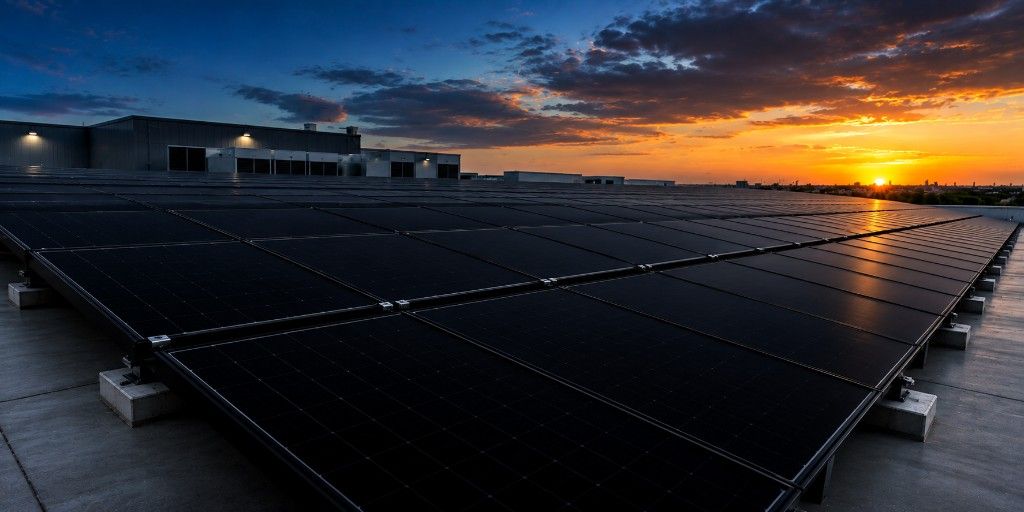
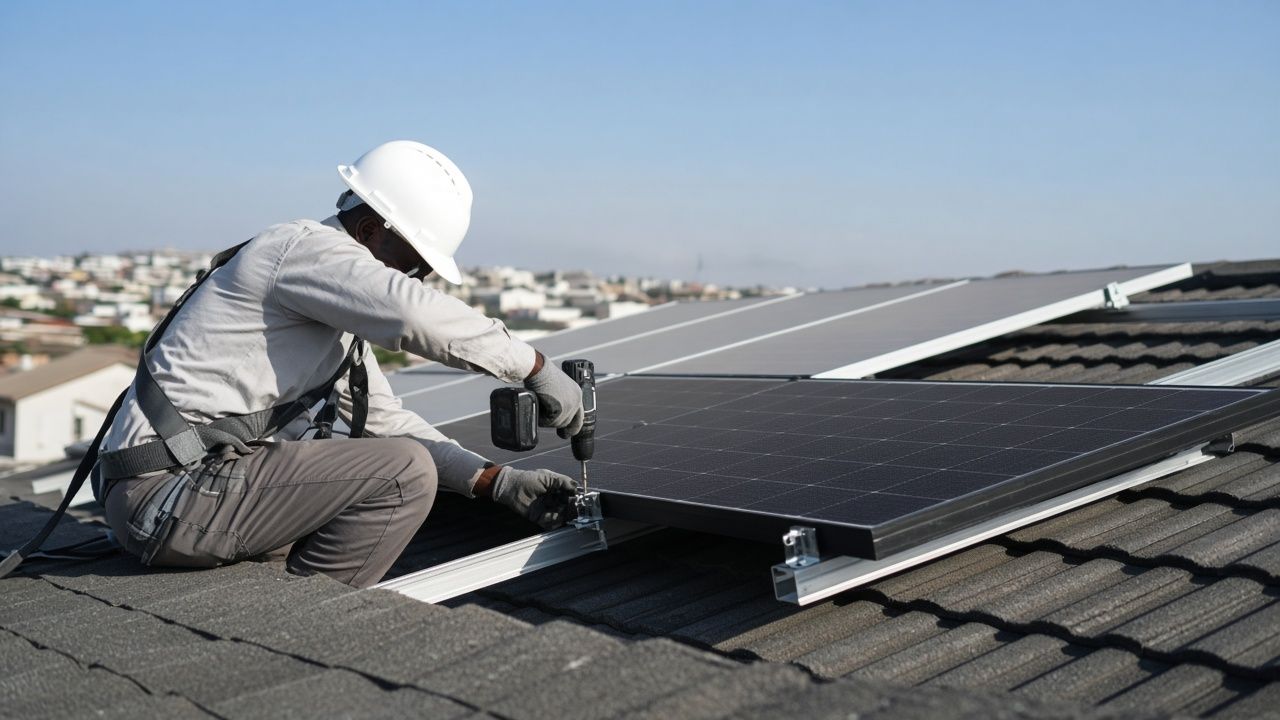
Panels placed on the roof sections that get the most sun, clear of shade from tanks, trees and nearby buildings, and fixed to suit your roof type.
Inverter
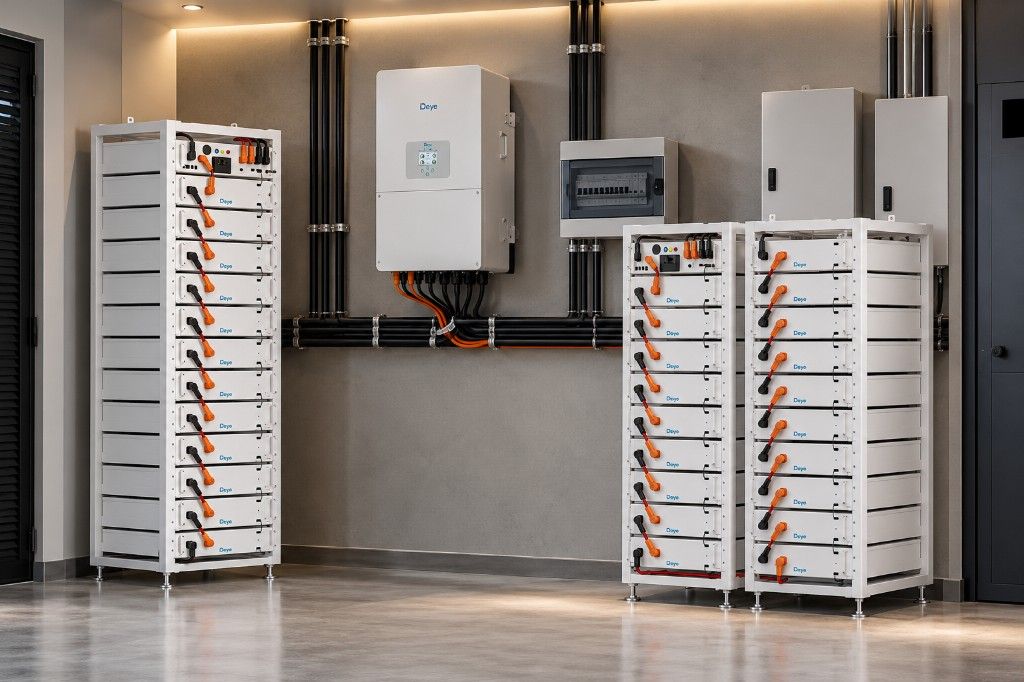
An inverter rated for the most you will run at once, usually a hybrid model that can charge from solar, the grid and a generator.
Batteries
Lithium or tubular batteries sized to run your essential loads through the night and through typical outages.
Protection and changeover
Breakers, surge protection, earthing and a changeover arrangement so grid, generator and solar are switched safely.
Running-cost comparison
What you spend now on fuel and electricity set beside what you can expect with solar, with every assumption written down.
What to know before you buy
How a home system is sized
We size a home system in three stages. First, we calculate the combined demand of appliances that may run at the same time to determine the inverter capacity. Next, we estimate the energy needed during the night and grid outages to size the battery storage. Finally, we size the solar array to serve daytime loads and recharge the batteries, allowing for site conditions and expected solar production.
What to keep off solar
Electric cookers, water heaters, pressing irons and large air conditioners draw a lot of power. Running them on solar makes the system much bigger and dearer, so most homes keep them on the grid or generator, or use them only in full sun.
Installation timeline
Your quotation states the delivery and installation dates. On-site work for a home system is usually measured in days rather than weeks, depending on the size of the system and access to the roof.
Maintenance
Panels need cleaning from time to time, especially during harmattan and in dusty areas. Batteries, connections and the inverter should be checked on a planned schedule, which we set out in your maintenance agreement.
Common questions
How much does a home solar system cost in Nigeria?
It depends on the appliances you want to run and for how long. A system for lights, fans, a TV and a fridge is much smaller than one that also runs air conditioners and a borehole pump. We give you a written quotation after the load assessment.
What size inverter do I need for my house?
Add up the watts of everything that might run at the same time, then allow headroom for motors such as fridges and pumps, which draw more power as they start. The inverter must cover that total. Our inverter guide explains kVA, kW, hybrid and off-grid models.
How many batteries will I need?
Battery size depends on the energy you use when the sun is not shining. Multiply each appliance by the hours it runs at night or during outages, add them up, then allow for the share of the battery you can safely use. Lithium batteries let you use more of their capacity than tubular ones.
Lithium or tubular batteries: which is better for a home?
Tubular batteries cost less upfront. Lithium batteries cost more but last more charge cycles, let you use more of their stored energy and need no topping up. Over the life of a system lithium is often better value, but it depends on your budget and how you use power.
Can solar run my air conditioner?
Yes, if the system is sized for it. An air conditioner is one of the biggest loads in a home, so it adds a lot to the inverter, battery and panel sizes. Inverter-type air conditioners use less power and are the better choice for solar.
Will I still need my generator?
Often not every day, but many homes keep one as backup for long cloudy spells or heavy loads. A hybrid inverter can be set to charge from the generator or grid only when the batteries run low, so the generator runs far less.
How long do solar panels last?
Good-quality panels are built to keep producing power for many years, and inverters and batteries have shorter lives than panels. Your quotation lists the manufacturer warranty for each item, and our workmanship cover is set out in your contract.
Do you install outside Lagos?
Yes. We are based in Lagos and take on projects across Nigeria. Tell us your location in the project brief and we will confirm how the survey will be arranged.
How we approach it
We start with your appliance list and the house itself, not a standard package. The inverter, batteries and panels are sized to the loads you choose to keep on, and the system can be extended later if your needs grow.