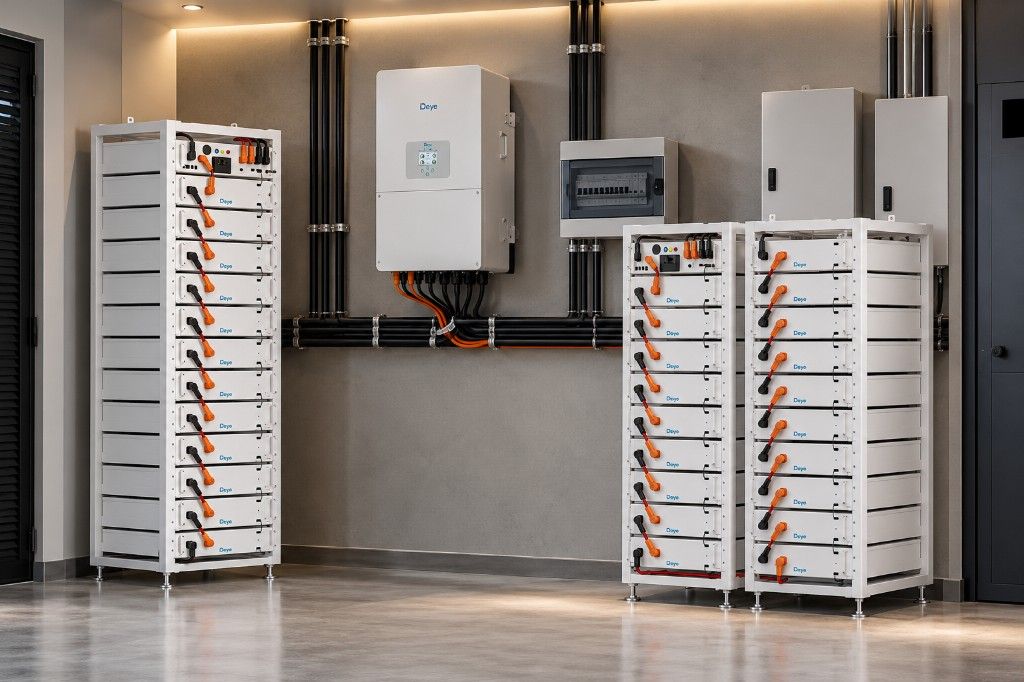
The inverter is the heart of a solar system. It turns the direct current (DC) from your panels and batteries into the alternating current (AC) your appliances use, and in most systems it also decides when to use solar, battery, grid or generator.
Inverter quotations are full of terms like 5 kVA, 48 V, MPPT and hybrid. This guide explains what they mean and how to choose.
kVA and kW: what is the difference?
Inverters are usually sold by their kVA rating, but appliances are labelled in watts (W) or kilowatts (kW).
- kW (kilowatts) is real power: the energy an appliance actually converts into light, heat or motion.
- kVA (kilovolt-amperes) is apparent power: the total electrical load the inverter has to carry, including power that flows back and forth without doing useful work. Motors and some electronics create this extra load.
The ratio between them is the power factor. Many inverters have a power factor of 0.8 to 1.0, so a 5 kVA inverter might deliver between 4 kW and 5 kW of real power. The datasheet will state the rated output in watts. Use that figure, not just the kVA, when matching an inverter to your loads.
How to size an inverter
- List the appliances that might run at the same time and add up their watts. This is your peak load. Our home sizing guide shows how to build this list.
- Allow for starting surges. Fridges, freezers, pumps and air conditioners draw several times their running power for a moment when they start. Inverters have a surge rating for this, usually for a few seconds.
- Add headroom. Running an inverter near its limit all the time makes it hot and shortens its life. Leave a margin, and more if you plan to add appliances.
The inverter size limits how much you can run at once. It does not decide how long you can run it. That is the battery’s job.
The three main types of inverter
| Type | Connects to | Works without grid? | Best for |
|---|---|---|---|
| Off-grid | Solar, batteries, sometimes a generator | Yes | Sites with no grid or very poor grid supply |
| Grid-tied | Solar and grid only, no batteries | No; switches off when the grid fails, for safety | Sites with reliable grid supply that want to cut daytime bills |
| Hybrid | Solar, batteries, grid and generator | Yes | Most Nigerian homes and businesses |
Off-grid inverters
An off-grid inverter runs the building entirely from solar and batteries, with a generator as backup if needed. It does not depend on the grid at all. It suits remote sites, or sites where grid supply is so poor that it adds little.
Grid-tied inverters
A grid-tied inverter feeds solar power into the building alongside the grid. It has no batteries. When the grid fails, it must shut down so it cannot feed power into lines that engineers may be working on. In Nigeria, where outages are common, a grid-tied system on its own gives no backup during outages.
Hybrid inverters
A hybrid inverter combines solar charging, battery storage and grid and generator input in one unit. It can be set to use solar first, then batteries, then the grid or generator. This is why hybrid inverters are the usual choice for Nigerian homes and businesses: they make the most of solar while keeping backup from every available source.
Other specifications to check
Battery voltage (12 V, 24 V, 48 V)
Larger systems use higher battery voltages, because higher voltage means lower current, thinner cables and less energy lost as heat. Most home systems above a small size use 48 V. The inverter and batteries must match.
MPPT charge controller
Most modern hybrid inverters include an MPPT (maximum power point tracking) controller, which gets the most energy from the panels as light and temperature change. Check the maximum solar input in watts and the maximum input voltage, because these limit how many panels you can connect. Some inverters have two MPPT inputs, which helps when panels face different directions.
Pure sine wave output
Pure sine wave inverters produce clean power, similar to good grid supply. Modified sine wave inverters are cheaper but can make motors run hot and noisy, and can damage sensitive electronics. For home and business use, choose pure sine wave.
Parallel capability
Some inverters can be connected in parallel to increase capacity later. If you expect your needs to grow, this can save you replacing the whole inverter.
Monitoring
Many inverters offer an app or web dashboard showing solar production, battery level and consumption. This makes it easier to spot problems early and understand your usage.
Common inverter mistakes
- Buying on kVA alone without checking the real power output in watts.
- Ignoring surge capacity for pumps and compressors.
- Mismatching battery voltage between inverter and batteries.
- Too many panels for the inverter’s solar input limits, or too few to recharge the batteries.
- Installing in a hot, unventilated space, which reduces output and lifespan.
- No surge protection or proper earthing, which leaves the inverter exposed to lightning and grid surges.
Questions to ask before you buy
- What is the continuous output in watts, and the surge rating?
- Is it hybrid, off-grid or grid-tied, and why is that right for my site?
- What battery voltage and chemistries does it support?
- What is the maximum solar input, and how many MPPT inputs does it have?
- Is it pure sine wave?
- Can it be paralleled or expanded later?
- What does the manufacturer warranty cover, and who handles claims?
If you want an inverter matched to your loads and batteries, our home solar service includes sizing and installation, and our battery guide covers the storage side.
Updated