Batteries are often the most expensive part of a solar system, and the part most likely to need replacing during its life. Choosing between lithium and tubular batteries is one of the biggest decisions you will make.
This guide explains the difference in plain terms, so you can compare quotations on value rather than price alone.
The two main types
Tubular batteries are a type of lead-acid battery with tube-shaped positive plates, designed for deep, repeated discharge. They have been the standard choice for inverter systems in Nigeria for many years. Most are “flooded”, which means they contain liquid electrolyte that must be topped up with distilled water.
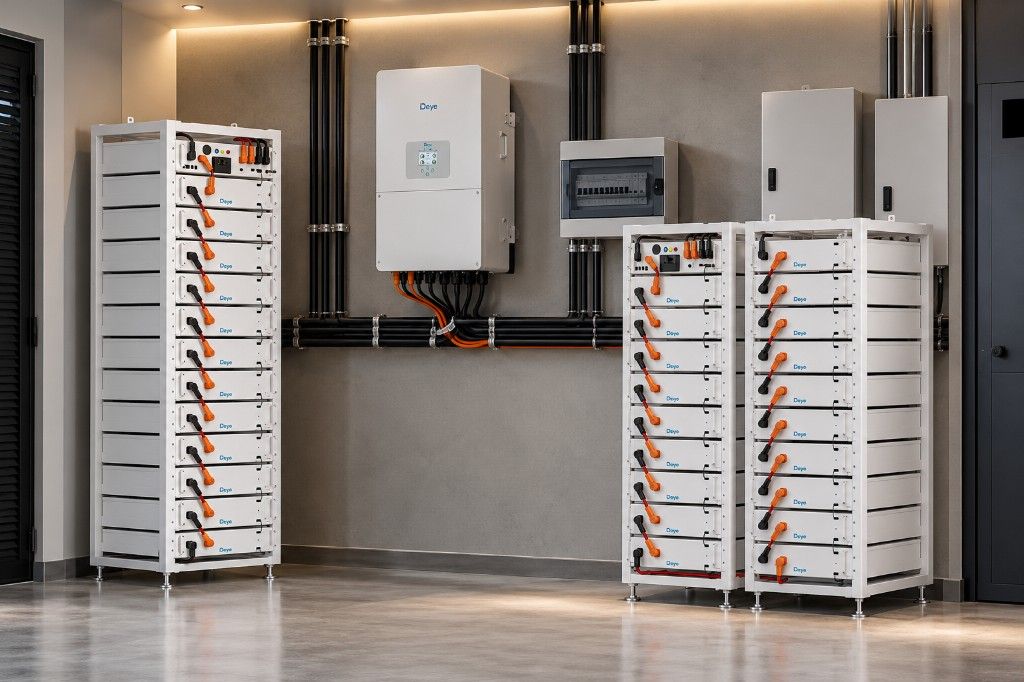
Lithium batteries for solar storage are usually lithium iron phosphate, often written LiFePO4 or LFP. This chemistry is chosen for home and commercial storage because it is stable, long-lasting and safe when properly installed. Lithium batteries come with a built-in battery management system (BMS) that protects the cells.
Usable capacity: the number that matters most
A battery’s rated capacity is not the energy you can actually use. Draining a battery too deeply shortens its life, so every battery has a recommended depth of discharge.
- Tubular batteries are typically recommended to discharge to around half their capacity for a good service life.
- Lithium batteries can typically use most of their rated capacity, often 80% to 90% or more, according to the manufacturer.
In practice, this means a lithium battery can deliver much more usable energy than a tubular battery of the same rated size. When comparing quotations, always ask for usable kWh, not just rated capacity. Check the depth of discharge in each datasheet.
Side-by-side comparison
| Tubular (lead-acid) | Lithium (LiFePO4) | |
|---|---|---|
| Upfront price | Lower | Higher |
| Usable share of capacity | Typically around half | Typically most of it |
| Cycle life | Fewer cycles | Many more cycles |
| Maintenance | Regular topping up with distilled water, terminal cleaning | None for the user |
| Weight and space | Heavy and bulky for the same usable energy | Lighter and more compact |
| Charging speed | Slower; needs full charges to stay healthy | Faster; tolerates partial charging |
| Ventilation | Needs a ventilated space, as flooded types release gas when charging | Sealed; follow the manufacturer’s placement rules |
| Monitoring | Basic | Built-in BMS, often with app monitoring |
| Heat tolerance | Life shortens in hot rooms | Life also shortens with heat, but usually copes better |
Cycle life varies widely between brands, so use the figure in each datasheet at the depth of discharge you will actually use.
Cost per usable kilowatt-hour
Price tags mislead. A fairer comparison is the cost of each usable kilowatt-hour over the battery’s life:
Lifetime cost per kWh = battery price ÷ (usable kWh per cycle × expected cycles)
Worked example with assumed figures
These numbers are illustrations only. Use real quotations and datasheets.
| Tubular bank (assumed) | Lithium battery (assumed) | |
|---|---|---|
| Rated capacity | 10 kWh | 5 kWh |
| Usable share | 50% | 90% |
| Usable energy per cycle | 5 kWh | 4.5 kWh |
| Expected cycles at that depth | 1,200 | 4,000 |
| Lifetime usable energy | 6,000 kWh | 18,000 kWh |
| Price | ₦2,000,000 | ₦3,000,000 |
| Cost per usable kWh | about ₦333 | about ₦167 |
In this example the lithium battery costs more to buy but about half as much per unit of energy delivered over its life. Your own figures may tell a different story, which is why it is worth doing the sum.
When tubular can still make sense
- Tight upfront budget, where lower capital cost matters more than lifetime value.
- Backup-only use, where the battery rarely cycles because grid supply is good and outages are short.
- Short-term installations that will be replaced or moved within a few years.
If you choose tubular, budget for regular maintenance, keep the batteries in a cool, ventilated space and avoid deep discharges.
When lithium is usually the better choice
- Daily cycling, where the battery charges from solar every day and powers the evening.
- Long or frequent outages.
- Limited space, or where you do not want to maintain batteries.
- Commercial sites where downtime and replacement visits cost money.
Questions to ask your installer
- What is the usable capacity in kWh, and at what depth of discharge?
- How many cycles does the manufacturer rate the battery for at that depth?
- Is the battery compatible with the inverter, and do they communicate with each other?
- What does the manufacturer warranty cover, and for how long or how many cycles?
- Where will the batteries be placed, and does that location stay cool and ventilated?
- Can more batteries be added later?
Mixing batteries
Do not mix old and new batteries, or batteries of different types or brands, in the same bank. The weaker batteries drag the others down and shorten the life of the whole bank. If you are upgrading from tubular to lithium, the inverter settings must be changed to match the new chemistry.
Battery size follows from your loads. To work out how much storage you need, read our home solar sizing guide, or ask us to size it as part of our home solar service.
Updated